For continued business
Budapest provides technology, shared-services, entrepreneurship, universities and excellent links across Central Europe.
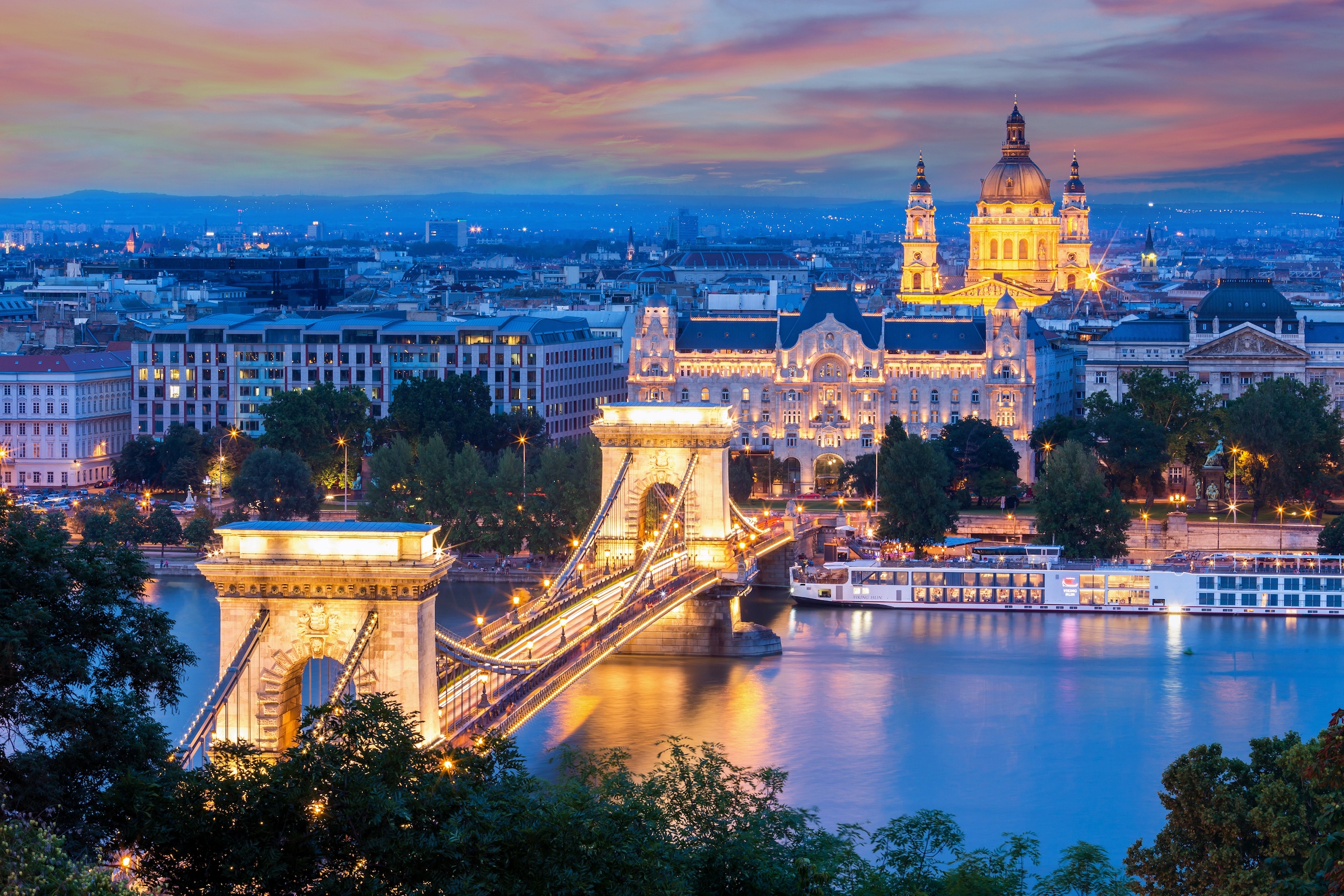
Grand-city culture with room for a more affordable European life.
Budapest carries the drama of a major European capital: the Danube, bridges, boulevards, thermal baths, cafés, opera, ruin bars and a skyline that becomes theatrical after dark. Yet ordinary life remains approachable. Neighbourhood markets, trams, bakeries and bath culture keep the city from becoming only monumental.
Beyond Budapest, the country changes register. Lake Balaton is summer ritual and increasingly a second-home market. Eger and Tokaj offer wine and landscape. Hévíz brings wellness and thermal culture. Sopron looks toward Vienna; Pécs and Szeged offer handsome regional-city life; the Danube Bend provides country access without losing the capital.
Hungary attracts founders, professionals, creatives, cost-conscious families and retirees who want culture and urbanity with a more moderate everyday cost base. It is best for people who appreciate Central European seasons, are willing to engage with the Hungarian language and prefer a city with edge and history to a frictionless international bubble.
The right choice depends on whether the household is optimizing for business, coast, culture, quiet, family life or nature. These are the broad distinctions to test before choosing a region.
Budapest provides technology, shared-services, entrepreneurship, universities and excellent links across Central Europe.
Districts V, VI, VII, IX and the Buda side offer different mixes of architecture, nightlife, family life, parks and river access.
Balaton offers sailing, vineyards, swimming and a strong seasonal community within reach of Budapest and Vienna.
Hévíz, Eger, Tokaj, Pécs and western Hungary suit buyers interested in baths, wine, landscape and a slower cost base.
A country becomes meaningful through repeatable habits: how mornings begin, where people gather, what weekends make possible and whether the ordinary week feels like the life being sought.
A bakery, market hall or café begins the day; trams and metro lines make much of central Budapest easy without a car.
Work can feel fully European and urban, while a thermal bath or riverside walk remains an ordinary possibility rather than a tourist-only event.
Opera, jazz, wine bars, ruin pubs, neighbourhood restaurants and the illuminated Danube give the city unusually varied after-work life.
Balaton, the Danube Bend, a spa town, vineyard or train to Vienna can all extend the geography of the week.
Relocation is not sustained by landmarks. It is sustained by small pleasures, familiar places and a culture that continues to reward attention after the novelty has faded.
Gulyás, paprikás, lángos, stuffed cabbage, pastries, Tokaji and serious contemporary dining create a richer food culture than stereotypes suggest.
Opera, classical music, photography, design, contemporary art and grand architecture give Budapest strong cultural density.
Thermal baths, concert halls, markets, wine bars and the legacy of the grand coffeehouse create a layered urban culture. Social life is less outwardly exuberant than Spain, but rich in ritual and intellectual texture.
Hungary delivers metropolitan beauty and cultural intensity at a scale that can still feel financially and socially accessible.
No country is universally right. A strong fit begins when the pace, landscape, social expectations and practical access align with the household’s real life.
Wants a real capital, fast internet, culture and Central European access without paying Zurich, Paris or Vienna prices.
Values architecture, music, cafés and layered history, and is comfortable with a city that feels more complex than polished.
Is drawn to thermal culture, wine regions and a lower cost base, while retaining Budapest for specialist services and international access.
Hungary can be highly attractive to families who want cultural density, urban infrastructure and a more measured cost base than many Western European capitals. Budapest supports established American, British and International Baccalaureate pathways, as well as a broad range of activities and specialist services. Outside the capital, the education choice becomes more local and Hungarian-language, which can be excellent for integration but changes the relocation profile.
Budapest offers multiple English-language and international curricula from early years through secondary school. Families should compare diploma pathway, language support, commute and university preparation before choosing a district.
Hungarian public and private schools can provide strong academic and cultural integration. The language is a meaningful threshold, particularly for older children, and should be evaluated honestly rather than treated as a minor adjustment.
The Buda Hills offer space, greenery and a residential feel while retaining city access. Central Pest suits families who value walkability, culture and a more urban childhood. Balaton is compelling for weekends or a second home, but not a substitute for Budapest’s year-round school ecosystem.
Traffic across the river, school-bus routes, after-school activities, healthcare and housing quality can materially change the week. Budapest is manageable, but the wrong side of the daily commute can erode its advantage.
Air schedules change by season and year. This section describes the current access pattern at a high level; exact nonstop routes and operating dates should be confirmed when travel is planned.
The Index identifies the country. The lived decision is usually regional, and sometimes highly local. These are the first distinctions worth experiencing in person.
Walkable grandeur, restaurants, culture and river life, with tourism intensity varying by district.
Privacy, larger homes, green space and a more residential family rhythm while remaining inside the capital.
Sailing, swimming, vineyards and strong summer life; exact towns differ in sophistication and winter activity.
Wine, baroque architecture and provenance-led country life with a specialist ownership appeal.
Thermal wellness, western Balaton access and a more year-round retirement-style proposition.
Three regional alternatives offering Austrian proximity, cultural depth or university-city energy beyond Budapest.
A polished view should still be an honest one. Practical realities do not weaken the attraction; they reveal the conditions under which the life can work well.
English works in many professional circles, but Hungarian materially improves independence and belonging.
Hungary is in the EU but not the euro area; household budgeting and property funding should recognize that difference.
Grand façades can hide association finances, deferred maintenance and renovation complexity.
Budapest’s international life should not be assumed to represent smaller towns or rural services.
Online research can inspire the move. It cannot coordinate the professionals, sequence and local judgment required to execute it well.
Reside Global helps define the intended life, narrow the region and, where appropriate, introduce experienced local professionals. The exact team depends on the client and project. Regulated legal, tax, immigration, financial and technical advice remains with the appropriate independent specialists.
A buyer-side professional who understands neighbourhood quality, year-round life, current inventory and the difference between a beautiful listing and a durable home.
Local counsel or the appropriate conveyancing professional to test title, contracts, ownership restrictions and succession questions before commitment.
An architect, engineer, surveyor or local technical specialist able to examine condition, permissions, alterations and realistic maintenance.
Qualified immigration, tax and financial professionals who can assess the household’s actual facts rather than fit them into a generic online answer.
Banking, insurance, schools, healthcare navigation, household setup and property-management support so the move works after the keys are handed over.
A private discussion can clarify the intended use, pace, region, property brief and professional support the next stage may require.